
Recipe Details
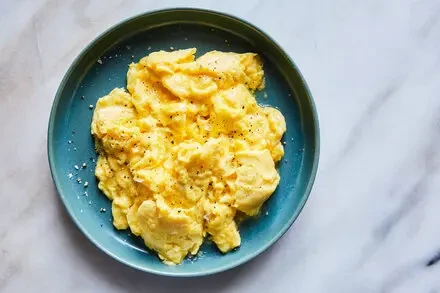
Extra-Creamy Scrambled Eggs: A Technique for Silky, Tender Results
Prep & Cook Time
Total Time: 5 minutes
Servings: 1 (easily scaled for 2–4 people)
Difficulty: Easy
Ingredients
2 large eggs (room temperature, for even cooking)
1/4 tsp fine sea salt (or to taste)
1 tsp starchy slurry (choose one: cornstarch, potato starch, or tapioca starch)
1–2 tbsp water or milk/half-and-half (replace water with milk for creamier texture)
1 tbsp unsalted butter (or neutral oil, e.g., canola)
Starchy Slurry Preparation
Combine the starch with 1 tbsp water (or milk/half-and-half for richness) in a small bowl. Whisk until smooth and lump-free; set aside.
Method
Step 1: Preheat the Pan
Heat a non-stick or stainless steel skillet over medium-low heat. Add the butter (or oil) and swirl to coat the pan. To test the pan’s temperature: sprinkle a tiny drop of water onto the surface. If it sizzles and evaporates instantly, the pan is ready (too hot water would bubble; too cool water would pool).
Step 2: Prepare the Eggs
Crack eggs into a mixing bowl, add salt, and whisk vigorously for 30 seconds until fully combined and slightly frothy. Pour in the starchy slurry and whisk again to integrate evenly.
Step 3: Scramble to Perfection
Pour the egg-starch mixture into the preheated pan. Using a heatproof spatula, stir the eggs in gentle, circular motions, scraping the bottom and sides to prevent sticking. Continue stirring until the eggs are softly set but retain a slight sheen and moisture—typically 1–2 minutes.
Soft-scrambled: Stir for 30 seconds (silky, runny center).
Medium-scrambled: Stir for 1 minute (slightly thickened, smooth texture).
Hard-scrambled: Stir for 2 minutes (fully set but still tender, not rubbery).
Key Tips for Extra Creaminess
Starch Selection: Potato or tapioca starch outperform cornstarch for extra tenderness (they activate at lower temperatures, slowing protein coagulation). Use cornstarch if preferred.
Fat Matters: Butter adds depth and creaminess; olive oil (mild) or ghee (nutty) work too.
Milk Substitution: Swap water in the slurry for half-and-half or heavy cream to amplify richness without compromising texture.
Temperature Control: Avoid high heat—too hot a pan causes rapid protein denaturation, leading to dryness. Reduce heat slightly if eggs thicken too quickly.
Technique Credit: Adapted from Mandy Lee of Lady & Pups, this method harnesses starch’s ability to create a "slow-cook" effect, ensuring eggs remain tender and moist even when stirred.
Final Note: For those who prefer a fluffier texture, try adding a pinch of baking powder to the egg mixture (this lightens the scramble slightly). Adjust salt and starch ratios to taste for your ideal creamy consistency.