
Recipe Details
Cinnamon Toast
By Ali Slagle
Updated May 3, 2021
Basic Information
Prep Time: 5 minutes
Cook Time: 5 minutes
Total Time: 10 minutes
Servings: 1–2 (adjustable)
Rating: ★4.0 (661 reviews)
Reader Comments: 80+
Ingredients
2 thick-cut bread slices (preferably 1.5–2 cm thick; white sandwich bread or brioche recommended for texture balance)
1.5 tbsp unsalted butter (for browning and coating)
2 tbsp granulated sugar
1 tsp ground cinnamon
Pinch of fine sea salt (optional, to enhance sweetness)
Step-by-Step Instructions
1. Prepare the Bread
Select sturdy, thick-cut bread (avoid overly soft or thin slices). For a cleaner presentation, trim crusts if desired, though leaving them adds subtle crunch. Cut bread into uniform 1.5–2 cm thick slices.
2. Sauté the Bread in Browned Butter
Heat a non-stick skillet over medium-low heat. Add butter and let it melt slowly. Once the butter begins to foam and then subside (around 1–2 minutes), the butter will develop a nutty aroma and golden hue (browning stage). Add the bread slices to the skillet.
Cook undisturbed for 2–3 minutes until the first side is golden-brown and lightly crisped. The browning butter imparts depth, preventing the bread from becoming soggy.
3. Sprinkle & Caramelize Sugar
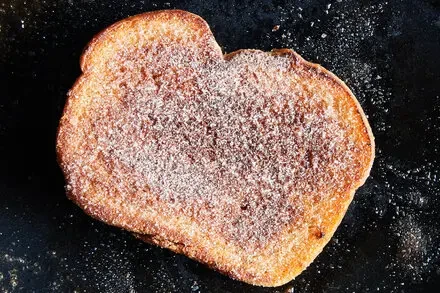
Flip the bread slices, then immediately sprinkle the cinnamon-sugar mixture (sugar + cinnamon, mixed evenly) over the top. The residual heat will start caramelizing the sugar, creating a glossy, sweet crust.
Let the bread cook for 1–2 minutes undisturbed. The sugar should melt into a golden, bubbly layer without burning—this is critical for achieving the crunchy exterior.
4. Final Seasoning
Flip the bread once more, and lightly dust an additional pinch of cinnamon-sugar on top. Gently press the sugar into the bread to ensure adhesion. This dual application of sugar ensures both immediate sweetness and long-lasting crunch.
5. Serve
Transfer the toast to a plate. Enjoy immediately while the cinnamon sugar remains warm and sticky, balancing the bread’s gooey interior with a caramelized exterior.
Professional Tips
Bread Optimization: Day-old bread (stale) crisps better than fresh bread, which can steam rather than sear. For richer flavor, substitute brioche for a buttery, tender base.
Butter Technique: Use unsalted butter to control salt levels. Avoid high heat to prevent burnt butter (which tastes acrid).
Sugar Customization: For a deeper caramel flavor, replace ½ the sugar with light brown sugar. Increase cinnamon to 1.5 tsp for a bold, aromatic profile.
Historical Context
Cinnamon toast emerged in 15th-century Europe as a cost-effective variant of French toast (Pain Perdu). Historically, French toast relied on eggs, milk, and premium bread, making it a luxury dish. By simplifying ingredients to bread, butter, and spices, cinnamon toast became accessible to working-class households. Its enduring popularity stems from its nostalgic, comforting dual-texture: soft, buttery bread balanced by a crisp, cinnamon-sugar crust.
Note: The dual-method sugar application (pre- and post-flipping) ensures caramelization without over-browning, creating the signature gooey-crunchy harmony.