
Recipe Details
Microwave-Steamed Eggs
By Eric Kim
Published Sept. 28, 2021
Recipe Overview
Total Time: 10 minutes (active prep + microwave cooking)
Difficulty: Easy
User Rating: 4.0/5 (based on 3,552 reviews)
Comments: 355 reader comments
Introduction
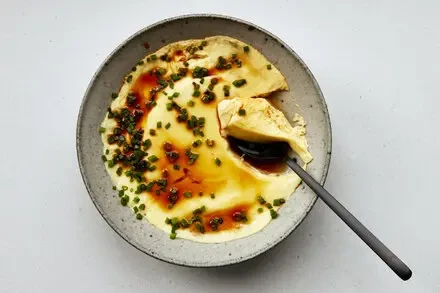
This steamed egg dish, celebrated for its silky-smooth texture and savory depth, delivers an unexpectedly rewarding result with minimal effort. Echoing the traditional preparations of Chinese zheng shui dan (steamed egg custard), Japanese chawanmushi (tea egg custard), and Korean gyeran jjim (steamed egg), this microwave-driven method ensures a delicate, wobbly consistency—reminiscent of silken tofu—by gently steaming the egg mixture with broth. The result is a dish that balances liquid and solid states, offering a luxurious mouthfeel that elevates it as an elegant starter, quick breakfast, or accompaniment to steamed rice.
Ingredients (Serves 1–2)
2 large eggs
150 ml (½ cup + 2 tbsp) warm chicken broth or filtered water (ratio: 1:1.5 eggs-to-liquid)
¼ tsp fine sea salt (adjust to taste)
Optional garnishes: finely chopped scallions, a pinch of white pepper, or diced mushrooms (for texture)
Equipment
Microwave-safe heat-resistant bowl (1–2 cup capacity)
Fine-mesh sieve (optional, for ultra-smooth texture)
Microwave-safe lid or plastic wrap (loose-fitting)
Spatula
Step-by-Step Instructions
1. Prepare the Egg Mixture
Crack eggs into a microwave-safe bowl. Add salt and whisk gently to combine. For an exceptionally smooth texture, strain the mixture through a fine-mesh sieve to remove egg membranes or air bubbles, ensuring even cooking.
2. Incorporate Liquid
Gradually pour warm broth (or water) into the bowl while whisking. The ratio of liquid to eggs is critical: 1.5 times the volume of eggs ensures a soft, wobble-worthy consistency. Stir thoroughly to distribute salt and liquid evenly.
3. Prepare for Microwaving
Cover the bowl loosely with a microwave-safe lid or plastic wrap, securing it with a few small holes to allow steam to escape. This prevents overflow and ensures uniform heating. If using an uncovered bowl, place it on a microwave-safe plate to catch drips.
4. Microwave Cooking
Set the microwave to 500 watts (or 50% power on a 1,000-watt model). Heat the mixture for 1 minute initially. After 1 minute, remove the bowl and stir gently with a spatula to redistribute the mixture (this prevents uneven solidification). Return to the microwave and heat for an additional 1–1.5 minutes, checking for texture after each interval.
5. Check Consistency
After heating, the custard should exhibit a "wibble-wobble" texture: gentle tapping of the bowl causes slight movement, indicating a soft-set consistency (not fully solid or runny). If overcooked (dry or rubbery), heat for 30-second intervals until the desired texture is achieved.
6. Rest and Serve
Let the dish rest for 2–3 minutes to allow residual heat to equalize. Garnish with optional ingredients, then serve immediately.
Key Tips
Power Control: Avoid high heat (e.g., 700+ watts) to prevent drying or overcooking. 500 watts ensures gentle, uniform steaming.
Liquid Temperature: Warm broth/water (not boiling) prevents "cooking shock" and preserves texture.
Covering: A loose cover traps moisture, creating the steam needed for a velvety finish.
Serving Suggestions
This versatile dish pairs seamlessly as:
A light breakfast with toast or congee.
An elegant appetizer before a meal.
A comforting side with steamed rice, grilled fish, or stir-fried vegetables.
Storage
Store leftovers in an airtight container in the refrigerator for up to 2 days. Reheat gently at 300–400 watts to maintain texture. Freezing is not recommended, as it alters the delicate consistency.
Indulge in this effortless, restaurant-quality dish that balances simplicity with sophistication—ideal for busy days or special occasions alike.