
Recipe Details
Bridging Tradition and Innovation: A Festive Vegan Doughnut Recipe for Kwanzaa
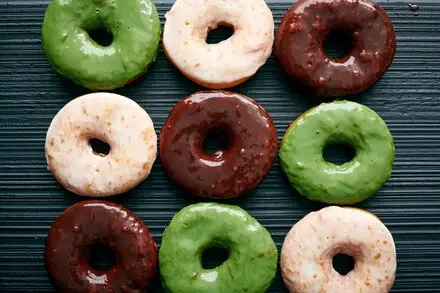
Maati Kheprimeni Angaza, a professional dancer and home baker based in Brooklyn, N.Y., infuses her Kwanzaa celebration with youthful energy by reimagining the holiday’s culinary traditions. Rather than adhering to time-honored classics like bread pudding, sweet potato pie, nut-filled pound cake, or citrus-forward fruit salad, she crafts vibrant, plant-based fried doughnuts—an innovative twist that honors Kwanzaa’s historical roots while embracing contemporary, accessible vegan cooking. These airy, colorful glazed treats bridge the gap between nostalgic culinary heritage and modern, joyful plant-based indulgence.
Vegan Festive Doughnut Recipe (Kwanzaa-Style)
Drawing on her passion for accessible, vibrant desserts, Angaza shares a simplified, vegan-friendly recipe for these celebratory doughnuts, perfect for Kwanzaa gatherings. The dough balances lightness and structure, while the multicolored glaze—featuring traditional Kwanzaa hues of red, green, and gold—adds festive flair.
Ingredients (Yields ~12 doughnuts)
For the Dough:
1 cup all-purpose flour (or spelt flour for a nutty texture)
¼ cup granulated sugar
½ tsp active dry yeast (or 1½ tsp baking powder for quicker rise)
¼ tsp fine sea salt
¾ cup unsweetened oat or almond milk (room temperature)
2 tbsp olive oil (or melted coconut oil)
1 tsp vanilla extract
½ tsp apple cider vinegar (to activate baking powder, if using)
For Frying:
- Vegetable or canola oil (for deep-frying, enough to fill a pot 2–3 inches deep)
For the Colorful Glaze:
1 cup powdered sugar
2–3 tbsp unsweetened oat or coconut milk
½ tsp vanilla extract
Food coloring (red, green, gold—Kwanzaa’s symbolic colors)
Instructions
1. Prepare the Dough
Yeast Activation (Optional): In a small bowl, mix ¼ cup warm plant milk, ½ tsp sugar, and yeast. Let sit 5–10 minutes until foamy (this “proofs” the yeast). If using baking powder, skip this step and add vinegar to the wet ingredients.
Combine Dry Ingredients: In a large bowl, whisk together flour, sugar, salt, and baking powder (if using).
Knead the Dough: Add activated yeast mixture (or wet ingredients: plant milk, oil, vinegar, vanilla) to the dry ingredients. Mix until a shaggy dough forms. Knead by hand for 5–7 minutes (or with a stand mixer, dough hook) until smooth, elastic, and slightly tacky.
First Fermentation: Transfer dough to a lightly oiled bowl, cover with a clean cloth, and let rise in a warm spot (75–80°F) for 1–2 hours until doubled in size.
2. Shape and Second Fermentation
Punch Down: Gently press the dough to release air. Transfer to a floured surface. Roll out to ½-inch thickness.
Cut Doughnuts: Use a 3-inch round cutter for the outer ring, then a 1-inch cutter to remove the center (for traditional ring doughnuts) or cut into squares/fun shapes. Place shaped doughnuts on a parchment-lined baking sheet, cover, and let rise 30–45 minutes (second fermentation) until puffed.
3. Fry the Doughnuts
Heat Oil: Pour vegetable oil into a heavy-bottomed pot, heating to 350°F (175°C). Test with a drop of dough—if it sizzles and rises, the oil is ready.
Fry: Carefully place 2–3 doughnuts at a time into the oil. Fry 2–3 minutes per side until golden brown and crispy. Use a slotted spoon to transfer to a paper towel-lined plate to drain excess oil.
4. Make the Colorful Glaze
Mix Glaze: In a bowl, whisk powdered sugar, plant milk, vanilla, and food coloring until smooth (add milk 1 tsp at a time for desired consistency).
Dip and Decorate: Let doughnuts cool slightly, then dip tops into glaze. Allow excess to drip off, then place on a wire rack to set (5–10 minutes). Garnish with edible gold dust or extra food coloring accents for Kwanzaa flair.
Final Note
By reimagining Kwanzaa’s festive treats through plant-based, fried dough, Angaza not only pays homage to the holiday’s spirit of community and creativity but also introduces a fresh, joyful dimension to its culinary heritage. These doughnuts are more than a dessert—they’re a celebration of tradition, innovation, and the power of accessible, delicious cooking.
—Nicole Taylor