
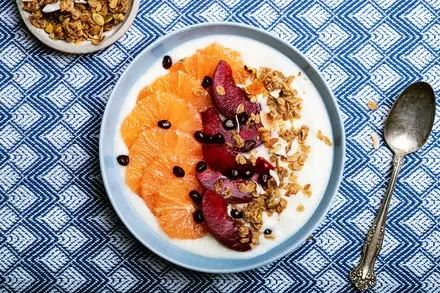
Recipe Details
Homemade Nondairy Yogurt: A Creamy, Sour-Sweet Alternative
Recipe Basics
Prep Time: 20 minutes
Fermentation Time: 6–8 hours
Chilling Time: 2–4 hours
Total Time: Approximately 8–14 hours (varies by fermentation and chilling duration)
Rating: 4/5 (212 reviews)
Comments: 31 comments
Introduction
Homemade nondairy yogurt offers a versatile, lactose-free alternative to traditional yogurt, balancing creamy texture with a naturally sour-sweet profile. Among nondairy milks, cashew milk is ideal for its rich, smooth consistency and ability to develop balanced acidity, making it the top choice here. For variety, soy milk, coconut milk, or other homemade nut/seed milks work well—just prioritize options with minimal ingredients (ideally nuts, grains, pulses, and water). A subtle starch thickener ensures silkiness without clumping, though adjust based on desired consistency: omit for a pourable smoothie base, add more for thickness, or use agar powder for a gelatinous texture.
Ingredients
Yields: 1 quart (approx. 4 servings)
Base Nondairy Milk: 2 cups unsweetened, unsalted cashew milk (or substitute with 2 cups soy milk, coconut milk, or homemade nut/seed milk; ensure no added sugars or stabilizers).
Fermentation Starter: ¼ cup plain, unsweetened nondairy yogurt (as a live culture; e.g., coconut yogurt, cashew yogurt, or soy yogurt) or 1 tsp commercial yogurt starter powder (containing Streptococcus thermophilus and Lactobacillus bulgaricus).
Thickener (Optional): 1 tsp cornstarch or tapioca starch (for creaminess; omit for a thin, pourable texture).
Optional Sweetener: 1–2 tbsp maple syrup, honey, or agave (added post-chilling to taste).
Instructions
1. Prepare the Nondairy Milk Base
For Homemade Cashew Milk: Soak 1 cup raw cashews in water overnight (or 4 hours) to soften. Drain, rinse, and blend with 2 cups fresh water until smooth. Strain through cheesecloth or a fine-mesh sieve to remove pulp, yielding ~2 cups milk.
For Store-Bought Milk: Use 2 cups unsweetened, unsalted cashew milk (or your preferred base) and skip soaking/straining.
2. Temper the Thickener (If Using)
- Mix the 1 tsp cornstarch/tapioca starch with 1 tbsp cold water in a small bowl to form a smooth slurry. This prevents lumps during heating.
3. Heat and Thicken the Base
In a medium saucepan, heat the cashew milk (or substitute) over low heat to 110–115°F (43–46°C; do not boil).
Stir in the starch slurry, then simmer for 1–2 minutes, stirring constantly, until the mixture thickens slightly (resembles warm cream). Remove from heat and let cool to 105–110°F (40–43°C).
4. Inoculate for Fermentation
- In a clean glass or ceramic container (nonreactive), whisk the cooled milk base with the nondairy yogurt starter (or powder). Ensure the starter is fully incorporated to distribute live cultures evenly.
5. Ferment the Yogurt
Cover the container tightly with a lid (or cheesecloth, secured with a rubber band). Place in a warm, dark spot (e.g., oven set to 110°F/43°C with oven light on, or a yogurt maker) to ferment for 6–8 hours.
Key: Temperature must stay between 105–115°F (40–46°C) for optimal acid development. Check after 6 hours—yogurt should be slightly thickened and tangy.
6. Chill and Serve
After fermentation, transfer the yogurt to the refrigerator and chill for 2–4 hours to firm the texture and mellow acidity.
For a thicker consistency, stir gently before serving (add more starter or ferment longer if needed). For a thinner, smoothie-friendly base, skip the thickener entirely.
Tips for Success
Shelf Life: Store homemade nondairy yogurt in an airtight container for up to 5–7 days in the fridge.
Texture Adjustments:
Thicker: Add 1–2 tbsp additional starch or increase fermentation time to 8–10 hours.
Thinner: Omit the starch or reduce fermentation to 4–5 hours; blend briefly before serving.
Agar Powder Alternative: For a gelatinous texture, replace starch with ½ tsp agar powder (add to 1 tbsp cold water, then mix into the milk base during heating).
Flavor Variations: Fold in 1 tsp vanilla extract, ¼ tsp cinnamon, or 1 tbsp mashed berries post-chilling for added complexity.
This recipe delivers a balanced, probiotic-rich nondairy yogurt that rivals its dairy counterpart in creaminess and tang. Enjoy it plain, drizzled with honey, or blended into smoothies!