
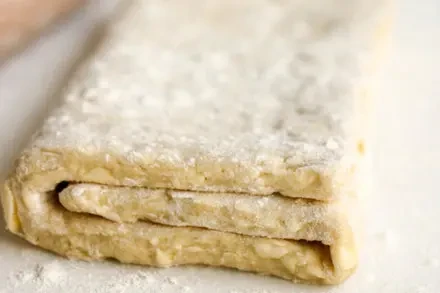
Recipe Details
Danish Dough: A Streamlined Recipe for Flaky, Buttery Pastries
Recipe Overview
Total Time: 30 minutes (preparation) + 6 hours resting (fermentation & chilling)
Difficulty: Easy to Moderate (due to structured resting time)
Rating: 5.0/5 (Based on 663 reviews)
Comments: 91 reader comments
Recipe Introduction
This streamlined Danish dough recipe delivers the iconic flakiness and buttery crispness of traditional Danish pastries, but with a fraction of the labor-intensive steps. Its secret lies in strategic planning for a 6-hour resting period, which simplifies the process while yielding a rich, layered texture. Perfect for home bakers seeking convenience without compromising authenticity, this dough is ideal for classics like almond croissants, pear-almond braids, or sweet cinnamon Danish.
Ingredients (for 1 large pastry or 2 medium-sized pieces)
250g (1 2/3 cups) high-gluten flour (all-purpose flour works as a substitute)
7g (1 1/2 tsp) active dry yeast
15g (1 tbsp) granulated sugar
3g (1 tsp) fine sea salt
240ml (1 cup) warm water or whole milk (110°F/43°C, to activate yeast)
115g (1/2 cup) cold unsalted butter, cut into 1/4-inch cubes (chilled until firm)
Optional: 1 tsp (2g) freshly ground cardamom (for pear-almond braids, add with dry ingredients)
Step-by-Step Instructions
1. Activate Yeast
In a small bowl, combine the warm water/milk, yeast, and sugar. Stir gently and let sit at room temperature for 5–10 minutes until a foamy layer forms on the surface (indicates active yeast).
2. Mix Dry Ingredients
In a large mixing bowl, whisk the high-gluten flour and salt to evenly distribute the salt.
3. Combine Wet & Dry Mixtures
Pour the activated yeast mixture into the flour-salt blend. Using a stand mixer with a dough hook attachment, knead on low speed for 5–7 minutes, or by hand for 10–12 minutes, until the dough is smooth, elastic, and slightly tacky (forms a soft ball that doesn’t stick to hands).
4. Incorporate Cold Butter
Add the chilled, cubed butter to the dough. Gently fold the butter into the dough using a spatula or by hand, pressing it into the flour mixture until fully incorporated. The dough will appear slightly uneven, but this ensures even butter distribution for later flakiness.
5. First Fermentation (Room-Temperature Proofing)
Transfer the dough to a lightly oiled bowl. Cover tightly with plastic wrap or a kitchen towel and let ferment at room temperature (25–28°C) for 1–2 hours, until doubled in size. To test, press a finger into the dough; it should spring back slowly, leaving a shallow indentation.
6. Critical Refrigeration (Resting Phase)
Gently press the fermented dough to release gas, shape into a smooth ball, and transfer to an airtight container. Refrigerate for at least 6 hours (preferably overnight). This long rest relaxes gluten and firms the butter, eliminating the need for traditional multi-step lamination while preserving flakiness.
7. Final Shaping & Secondary Fermentation
Remove the dough from the refrigerator and let it rest at room temperature for 30 minutes to soften. Roll into a 1/2-inch thick rectangle (adjust size for your pastry). For a pear-almond braid: spread almond frangipane along the center, place sliced pears on top, and braid the dough.
Cover loosely and ferment at room temperature for 1–2 hours until puffed and springy.
8. Baking
Preheat oven to 190°C (375°F). Bake the shaped pastry on a parchment-lined sheet for 15–25 minutes, until golden brown and fully cooked. For gloss, brush with egg wash (1 egg + 1 tbsp water) after 10 minutes of baking (optional for braids).
Pro Tips
No Food Processor? Hand-knead the dough, using a bench scraper to gently incorporate cold butter without overheating.
Butter Handling: Keep butter frozen until just before use; cubing it ensures uniform distribution and prevents melting.
Flavor Variations: Add 1 tsp coarsely ground cardamom with dry ingredients for pear-almond braids (enhances aromatic depth).
Storage: Leftover dough can stay refrigerated for up to 2 days. Remove and rest at room temperature for 30 minutes before shaping.
Recipe Inspiration
This dough is featured in Danish at Home: The Easier Way, a guide to simplified Scandinavian pastry techniques. For variations, explore almond-filled croissants or cinnamon-sugar twists using the same base recipe.
Save this recipe to your digital box or print for easy reference!