
Recipe Details
Tomato Jam Recipe
By Alison Roman | Adapted for Professional Preparation
Introduction
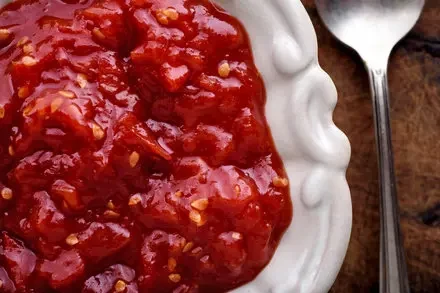
Tomato jam is a testament to tomatoes’ versatility as a fruit, yielding a spreadable preserve that balances natural sweetness with savory depth—far from cloying, it rivals ketchup in flavor while offering a more nuanced, herbaceous profile. This recipe, refined to ensure food safety, incorporates a tablespoon of vinegar to boost acidity, preventing botulism spore growth during long-term storage. Celebrated by 313 home cooks (4/5-star rating), it has 51 comments highlighting its adaptability as a condiment for sandwiches, roasted meats, or dipping.
Ingredients (Makes ~2 cups)
600g ripe tomatoes (preferably heirloom or beefsteak for texture; cored and cut into 2cm chunks)
150g granulated sugar (adjust to taste for sweetness; reduce if tomatoes are exceptionally ripe)
1 tablespoon apple cider vinegar (or white vinegar; critical for acidity)
1 small garlic clove (crushed; or 1/2 tsp garlic powder for convenience)
1 tsp dried herbs (e.g., oregano, thyme, or a mix of both; fresh herbs doubled)
1 dried chili pepper (optional, seeded for mild heat; omit for non-spicy version)
Pinch of salt (to enhance flavor; use sparingly)
Preparation & Equipment
Tools: Heavy-bottomed saucepan, heatproof glass jars (sterilized), ladle, slotted spoon, candy thermometer (optional, for checking consistency).
Prep: Wash tomatoes thoroughly; peel if skin is tough (blanch 30 seconds, shock in ice water, then slip skin off).
Step-by-Step Instructions
1. Macerate Tomatoes
Combine diced tomatoes, 1 tbsp sugar, and a pinch of salt in a large bowl. Cover and let sit at room temperature for 30–60 minutes (macerating). This draws out tomato juices, softening the fruit and reducing cooking time.
2. Simmer & Reduce
After maceration, transfer tomatoes (with accumulated liquid) to a saucepan. Add remaining sugar, vinegar, crushed garlic, dried herbs, and chili (if using). Stir to dissolve sugar. Bring to a boil over medium heat, then reduce to low. Simmer uncovered for 25–30 minutes, stirring occasionally, until tomatoes break down and the mixture thickens (it should coat the back of a spoon without dripping).
3. Test Consistency
Remove from heat. Drop a small spoonful onto a plate; if it holds its shape (no spreading), the jam is ready. For safety, reheat to 74°C (165°F) if canning (optional step).
4. Can & Store (For Longevity)
Sterilize jars: Boil clean jars and lids in water for 10 minutes; dry thoroughly.
Fill jars: Ladle hot jam into jars, leaving 5mm headspace. Wipe rim, apply lids, and tighten.
Cool & store: Let jars cool 12–24 hours; refrigerate unopened jars for up to 6 months, or freeze for 1 year.
Tips
Sweetness Adjustment: For less sugar, increase vinegar to 1.5 tbsp and add 1 tbsp water to the maceration step.
Flavor Variations: Add 1 tbsp fresh ginger for warmth, or rosemary for an earthy twist.
Safety Note: Never skip vinegar if canning; low-acid fruits like tomatoes require acid to prevent botulism.
Conclusion
This tomato jam transcends its "condiment" status, elevating charcuterie boards, roasted vegetables, or grilled cheese with a vibrant, savory-sweet profile. Its adaptability and safety-focused recipe make it a staple for home cooks seeking to reimagine seasonal produce.
Note: Ratings and comments reflect community feedback on original publication; adjust ingredients to personal taste.