
Recipe Details
Kaya Toast
Recipe adapted from Kyo Pang (Executive Chef, Kopitiam NYC), by Kiera Wright-Ruiz
Published: October 14, 2021
Introduction
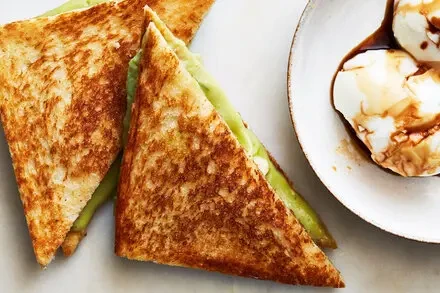
Kaya toast, a cornerstone of Southeast Asian breakfast culture, derives its name from the Malay term kaya, meaning “rich.” This iconic dish features toasted milk bread slathered with creamy, pandan-infused kaya jam and paired with soy-seasoned half-boiled eggs for dipping. The blend of sweet, custard-like kaya and savory, runny egg creates a harmonious balance, embodying the dish’s “rich” heritage.
Ingredients
For Kaya Jam (makes ~250g; prepare 1–2 days ahead):
4 large fresh pandan leaves (tied into 2-inch knots, ~100g)
150ml (½ cup) coconut milk (from 1 can, refrigerated)
120g (½ cup) palm sugar (or dark brown sugar, for substitution)
3 large eggs (150g), plus 1 extra yolk (for creaminess)
15g (1 tbsp) unsalted butter, softened
For the Toast:
4 thick slices soft milk bread (e.g., Hokkaido milk bread, ~15mm thick)
4 tbsp cold salted butter, softened
For Soy-Seasoned Half-Boiled Eggs:
4 large eggs
1 tbsp light soy sauce
1 tbsp water
½ tsp white sugar (optional, to balance saltiness)
Step-by-Step Instructions
1. Prepare the Kaya Jam
Yields ~250g jam; requires ~30 minutes cooking time + 4+ hours cooling.
Infuse Pandan: In a small pot, add pandan knots and 50ml (¼ cup) water. Simmer over low heat for 10 minutes to extract aroma. Remove from heat, steep 5 minutes, then strain to retain 45ml (3 tbsp) pandan-infused water; discard leaves.
Cook Coconut Milk Base: In a medium saucepan, combine strained pandan water, coconut milk, and palm sugar. Heat over low-medium heat, stirring until sugar dissolves (5–7 minutes).
Temper Eggs: Whisk eggs (and extra yolk) in a bowl. Slowly pour ¼ cup of the warm coconut milk mixture into the eggs, whisking constantly to prevent curdling. Return the egg-milk mixture to the saucepan.
Reduce to Kaya: Cook over low heat, stirring continuously with a heat-resistant spatula, until the mixture thickens to coat the back of a spoon (15–20 minutes). Remove from heat, stir in softened butter until smooth.
Cool: Transfer kaya to a heatproof container, cool to room temperature, then refrigerate for at least 4 hours (or overnight) to set.
2. Make the Soy-Seasoned Half-Boiled Eggs
Boil Eggs: Bring a pot of water to a rolling boil. Gently lower eggs into the water; set timer for 6 minutes (for runny yolk).
Cool & Peel: Transfer eggs to an ice bath for 5 minutes, then peel carefully under running water.
Marinate Eggs: In a small bowl, mix soy sauce, water, and sugar (if using). Slice eggs in half lengthwise; dip the cut side into the marinade, or let eggs sit in the marinade for 5 minutes.
3. Toast & Assemble
Toast Bread: Preheat a toaster to high (or grill pan over medium heat). Toast milk bread slices until golden-brown on both sides (2–3 minutes per side).
Spread Kaya & Butter: Immediately after toasting, spread 1 tbsp cold salted butter on one side of each toast slice. Top with 2–3 tbsp cooled kaya jam (or more to taste).
Form Sandwiches: Press two butter-jam-coated slices together to form a sandwich. Repeat for remaining slices.
Serving
Serve kaya toast sandwiches warm, alongside the marinated half-boiled eggs. For extra indulgence, place a small dollop of cold salted butter next to the toast to melt slightly against the warm bread. The runny yolk of the eggs pairs perfectly with the sweet, custardy kaya, creating a comforting, balanced bite.
Total Time: ~45 minutes (prep time for eggs and toast; longer for kaya jam, which is best made ahead).
Servings: 4
Note: Kaya jam can be stored in an airtight container in the refrigerator for up to 2 weeks. For authentic texture, avoid overcooking during the reduction step to preserve the creamy consistency.