
Recipe Details
Swiss Rosti with Smoked Salmon and Poached Egg: A Refined Weekend Breakfast Recipe
Introduction
In Switzerland, rosti (pronounced roosh-ti) is celebrated as a national dish, cherished particularly in German-speaking cantons for its rustic elegance and comforting simplicity. This iconic dish, akin to a thick, crispy potato pancake, traditionally features grated potatoes pan-fried to golden perfection, often served with hearty accompaniments like ham, cheese, or sausages. This refined variation elevates the classic recipe by pairing the potato base with silky smoked salmon, tangy sour cream, and a perfectly poached egg—creating an indulgent weekend breakfast that balances tradition with gourmet flair.
Ingredients (Serves 2–3)
For the Rosti
600g (1.3 lbs) russet or Yukon Gold potatoes (peeled)
2 tbsp unsalted butter (plus extra for greasing)
½ tsp sea salt (adjust to taste)
Freshly ground black pepper (to taste)
For Poached Eggs
2 large eggs
2 cups water (for poaching)
1 tsp white vinegar (to help egg whites coagulate)
For Assembly
100g (3.5 oz) high-quality smoked salmon, sliced
60g (¼ cup) sour cream (or crème fraîche)
Flaky sea salt and freshly ground black pepper (for finishing)
Fresh chives or dill (optional, for garnish)
Step-by-Step Instructions
Step 1: Prepare Potatoes in Advance
For the smoothest, most structured Rosti, boil the potatoes 1 day ahead (or at least 3–4 hours before cooking):
Cut potatoes into 2cm (¾-inch) chunks. Place in a pot, cover with cold water by 1 inch, and add ¼ tsp salt.
Bring to a boil, then reduce heat to simmer. Cook until potatoes are just tender (a skewer pierces easily but they still hold shape)—about 10–12 minutes.
Drain thoroughly, spread on a plate, and cool completely (preferably in the fridge overnight). Cold potatoes grate more cleanly and reduce excess moisture.
Step 2: Grate and Drain Potatoes
Grate cooled potatoes using a box grater with large holes (or a food processor with a grating attachment).
Transfer grated potatoes to a clean kitchen towel or colander. Squeeze firmly to remove as much moisture as possible (reserve the squeezed water for later if needed).
Return drained potatoes to a bowl, add 1 tbsp melted butter, salt, and pepper. Mix gently to coat the starch—this ensures the Rosti holds together during cooking.
Step 3: Fry the Rosti (Thick Potato Pancake)
Heat a large non-stick skillet or cast-iron pan over medium heat. Add 1 tbsp butter and swirl to coat.
Press the grated potato mixture firmly into the pan, forming a thick, even circle (2–3cm/¾–1 inch thick). Cook undisturbed for 5–6 minutes until the bottom is golden and crispy.
Flip carefully with a spatula, add 1 more tbsp butter, and cook the second side for 5–6 minutes until deep golden-brown. Transfer to a plate and rest 2 minutes. Slice into wedges.
Step 4: Poach the Eggs
While the Rosti rests, prepare a small pot of water: Bring 2 cups water to a gentle simmer (80–85°C/175–185°F). Add vinegar.
Crack eggs into small bowls (to avoid shell fragments). Create a gentle whirlpool in the water with a slotted spoon, then pour each egg into the center.
Cook 3–4 minutes until whites are set but yolks remain runny. Use a slotted spoon to transfer to a paper towel to drain.
Step 5: Assemble and Serve
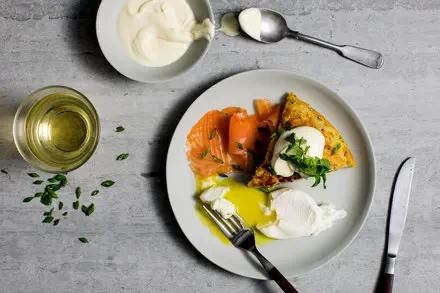
Arrange Rosti wedges on a warm plate. Top each wedge with smoked salmon slices, a poached egg, and a generous drizzle of sour cream.
Finish with flaky salt, black pepper, and garnish with chives or dill. Serve immediately while the Rosti is crisp and the egg yolk is creamy.
Pro Tips for Success
Potato Prep: Boiling and chilling potatoes ensures they retain structure during grating and frying. If short on time, cool potatoes in the fridge for 30 minutes post-boiling.
Rosti Texture: Avoid over-squeezing—residual moisture helps bind the mixture. Too dry = crumbly; too wet = soggy.
Egg Poaching: A gentle simmer prevents egg whites from spreading. Adjust heat to maintain bubbles but not a boil.
Smoked Salmon: Opt for house-cured salmon for briny depth that complements the potato’s creaminess.
Cultural Context
Rosti evolved from rural Swiss kitchens, where leftover potatoes were transformed into a crispy, satisfying dish. Today, it stands as a symbol of Swiss culinary heritage, celebrated for its adaptability—here, we modernize it with elegant toppings, perfect for lazy weekend mornings or intimate gatherings.
Enjoy this balance of rustic comfort and gourmet indulgence! 🥔✨